This comprehensive guide explores the ultimate culinary debate. We analyze the cultural impact, cost differences, and hygiene factors of both dining styles. You will discover actionable tips, common pitfalls, and expert insights to help you make the best culinary choices during your travels.
The Core Debate: Street Food vs Fine Dining Abroad
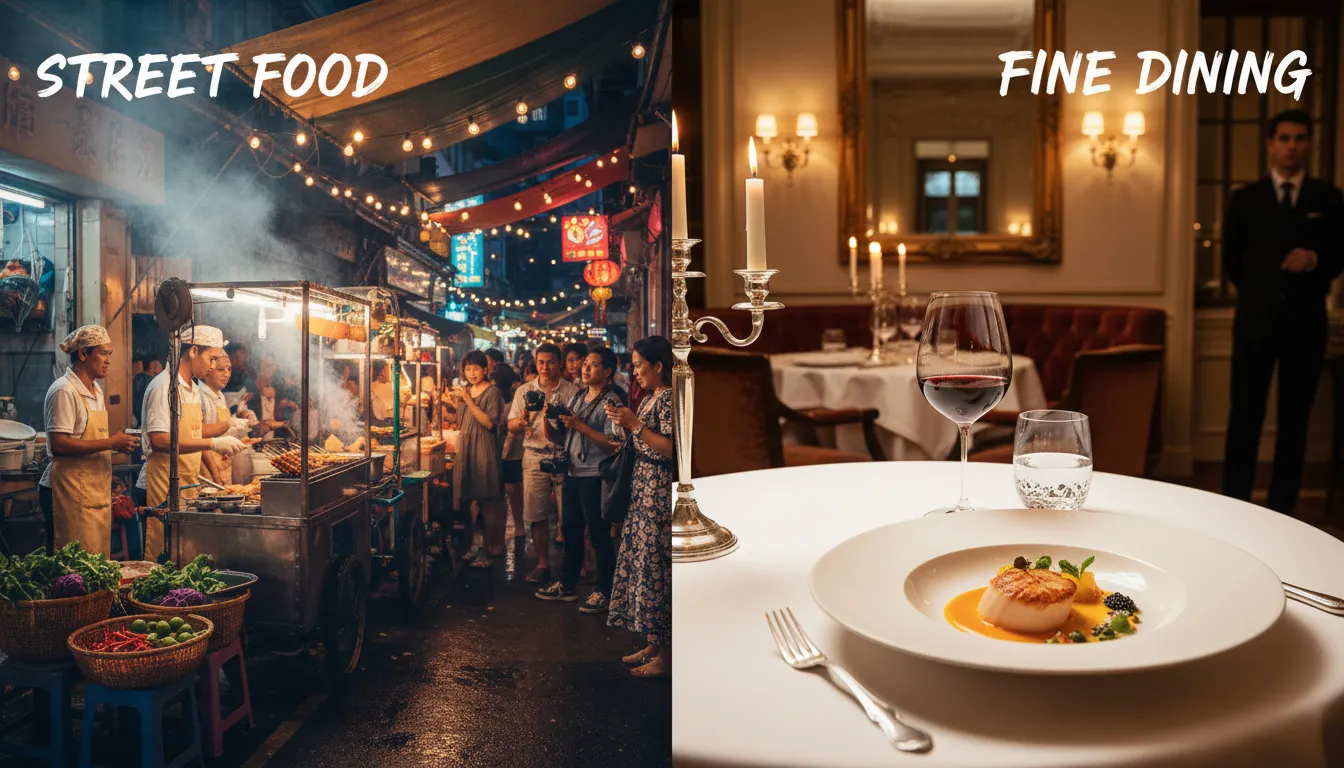
Traveling offers a unique opportunity to explore new cultures through flavor. When you debate Street Food vs Fine Dining Abroad, you are really choosing between two entirely different ways of experiencing a destination. Do you want the raw, bustling energy of a local market, or the refined, carefully curated atmosphere of a Michelin-starred restaurant? Both paths offer immense value, and understanding their differences will help you craft the perfect travel itinerary.
Choosing between Street Food vs Fine Dining Abroad involves looking at your budget, your desire for cultural immersion, and your comfort level with different dining environments. Street food provides an immediate, unpolished look into the daily lives of locals. Fine dining, conversely, showcases the highest level of culinary artistry a country has to offer.
The Authentic Charm of Local Markets
When exploring Street Food vs Fine Dining Abroad, you must first understand the appeal of the streets. Vendors often spend decades perfecting a single dish. You get to watch your food being prepared right in front of you, creating a sensory experience filled with sights, sounds, and incredible aromas. This accessibility makes street food a favorite for travelers who want to eat exactly how the locals eat.
For example, grabbing a quick taco in Mexico City or a bowl of pho in Hanoi connects you directly to the culinary heartbeat of the city. You engage with the vendor, stand shoulder-to-shoulder with residents, and enjoy bold, unapologetic flavors.
The Refined Elegance of Upscale Restaurants
On the other side of the Street Food vs Fine Dining Abroad conversation sits the luxury restaurant experience. Fine dining establishments offer a controlled, elegant environment where chefs transform local ingredients into edible art. These restaurants often provide exceptional service, wine pairings, and a quiet ambiance that allows you to truly focus on the complexity of the meal.
Institutions recognized by the Michelin Guide set global standards for quality and creativity. When you book a table at a top-tier restaurant in Paris or Tokyo, you are paying for an entire evening of entertainment and hospitality. The chefs often use modern techniques to elevate traditional flavors, giving you a fresh perspective on the region’s culinary heritage.
Cost and Value: Breaking Down the Economics

The financial aspect plays a massive role in the Street Food vs Fine Dining Abroad decision. Your budget dictates how often you can indulge in luxury and how much you will rely on budget-friendly options.
Maximizing a Travel Budget
Street food is undeniably cost-effective. You can often secure a filling, delicious meal for just a few dollars. This low price point allows you to sample multiple dishes throughout the day without draining your wallet. You can eat five different snacks across a night market for the price of one appetizer at a standard sit-down restaurant. This makes street food highly appealing for backpackers and budget-conscious explorers.
Investing in a Culinary Experience
Fine dining requires a significant financial investment. Tasting menus can cost hundreds of dollars per person. However, you must view this cost as an investment in an experience rather than just a meal. You pay for the chef’s expertise, the premium ingredients, the beautiful setting, and the flawless service. For many travelers, saving up for one extraordinary fine dining meal is a major highlight of their trip.
Quality, Safety, and Hygiene Standards
Safety remains a primary concern for many travelers weighing Street Food vs Fine Dining Abroad. A bad meal can ruin several days of a carefully planned vacation.
Navigating Street Food Safety
Street food safety varies wildly depending on the destination. However, following basic rules can keep you safe. Always look for stalls with long lines of locals. High turnover means the food is fresh and hasn’t been sitting out for hours. Choose vendors who cook the food to order over high heat, as heat kills most harmful bacteria. According to the World Health Organization, basic food hygiene principles apply everywhere, so wash your hands and carry hand sanitizer.
The Controlled Environment of Fine Dining
Fine dining restaurants adhere to strict health and safety regulations. The kitchens are spotless, the ingredients are carefully sourced, and the staff follows rigorous hygiene protocols. If you have severe food allergies or a sensitive stomach, fine dining offers a much safer environment. You can communicate your dietary restrictions clearly, and the kitchen will accommodate you with precision.
Comparison Table: Street Food vs Fine Dining Abroad
To help you visualize the Street Food vs Fine Dining Abroad debate, we have created a clear comparison table highlighting the key differences.
|
Feature |
Street Food |
Fine Dining |
|---|---|---|
|
Cost |
Very affordable ($1 – $10) |
Expensive ($50 – $300+) |
|
Atmosphere |
Bustling, loud, energetic |
Quiet, refined, elegant |
|
Service |
Quick, minimal, self-seating |
Highly attentive, personalized |
|
Dress Code |
Completely casual |
Smart casual to formal |
|
Time Required |
10 to 30 minutes |
2 to 4 hours |
|
Cultural Immersion |
High (eating with locals) |
Moderate (focus on culinary art) |
|
Hygiene Risks |
Moderate to High |
Very Low |
Cultural Immersion: Connecting with the Destination

Food serves as a universal language. The way you eat while traveling shapes how you understand the local culture. When looking at Street Food vs Fine Dining Abroad, consider what kind of cultural immersion you prefer.
Street food forces you to interact with the environment. You might point to what you want, try to speak a few words of the local language, and find a spot to sit on a crowded curb. It is raw and unfiltered. You see what the working class eats every day.
Fine dining provides a different type of cultural insight. It shows you how a culture defines luxury and celebration. You experience the region’s highest level of hospitality. Chefs often weave historical narratives into their tasting menus, telling the story of their country through carefully plated dishes.
Common Mistakes to Avoid When Dining Abroad
Travelers often make easily preventable errors when navigating Street Food vs Fine Dining Abroad. Avoid these common pitfalls to ensure a flawless culinary journey.
- Judging street food solely by appearance: Some of the most incredible meals come from humble, rundown carts. Do not let a lack of aesthetic appeal deter you from trying something delicious.
- Failing to make restaurant reservations: Popular fine dining establishments book up months in advance. You cannot expect to walk in and get a table. Plan ahead.
- Drinking tap water with street food: Even if the food is cooked perfectly, drinking unpurified water or having ice in your drink can cause illness. Always stick to bottled water.
- Ignoring local dining customs: Every culture has different rules about tipping, using utensils, and ordering. Research these customs before you arrive so you do not accidentally offend the staff. You can learn more from authoritative sources like Lonely Planet’s cultural etiquette guides.
- Sticking only to familiar foods: Traveling is the time to push your boundaries. If you only eat what you know, you miss out on the magic of Street Food vs Fine Dining Abroad entirely.
Pro Tips for the Ultimate Culinary Travel Experience
To master the art of Street Food vs Fine Dining Abroad, you need a solid strategy. Use these expert insights to maximize every meal on your itinerary.
- Follow the locals: If a street stall is empty during peak lunch hours, keep walking. Locals know where the best, safest food is located.
- Communicate allergies clearly: Use a translation app or carry a written card in the local language explaining your food allergies. This works perfectly in both street markets and high-end restaurants.
- Balance your itinerary: Do not force yourself to choose just one style. Have street food for lunch and book a fine dining restaurant for dinner. This contrast highlights the best of both worlds.
- Take a food tour on your first day: A local guide can introduce you to the street food scene safely, teaching you what to look for and what to avoid during the rest of your trip.
- Pack basic medications: Always carry antacids and stomach medicine just in case. Your digestive system might need time to adjust to new spices and ingredients, regardless of where you eat.
The Evolution of Global Gastronomy
The lines between Street Food vs Fine Dining Abroad are beginning to blur. We are witnessing an incredible shift in global gastronomy. Michelin inspectors now award stars to exceptional street food vendors in cities like Bangkok and Singapore. This recognition proves that incredible flavor and culinary mastery do not require white tablecloths and expensive silverware.
Simultaneously, fine dining chefs frequently draw inspiration from the streets. They take a beloved childhood street snack and elevate it using premium ingredients and modern techniques. This cross-pollination enriches the global food scene. It means that whether you eat Street Food vs Fine Dining Abroad, you are participating in a dynamic, evolving culinary conversation.
Dietary Restrictions and Dining Styles

Managing dietary restrictions adds another layer to the Street Food vs Fine Dining Abroad decision. Vegans, vegetarians, and gluten-free travelers face unique challenges.
Fine dining restaurants excel at accommodating special diets. When you book your table, you can notify the chef of your requirements. They will often design a custom menu just for you, ensuring you do not miss out on the culinary experience.
Street food can be more challenging for strict diets, primarily due to language barriers and hidden ingredients like fish sauce or cross-contamination on grills. However, many cultures have naturally vegan or gluten-free street food traditions. Researching traditional dishes before your trip makes it much easier to spot safe options in a busy market.
Making the Final Choice
You do not have to pick a definitive winner in the Street Food vs Fine Dining Abroad debate. The smartest travelers embrace both. They use street food to fuel their daily explorations, keeping their budget in check while experiencing the vibrant local culture. Then, they treat themselves to a fine dining experience to celebrate the trip and appreciate the refined artistry of the region’s top chefs.
By understanding the unique benefits and potential risks of both dining styles, you can travel with confidence. You will know exactly how to find the freshest street tacos, and you will know how to secure a table at the city’s most exclusive restaurant.
Conclusion
Deciding between Street Food vs Fine Dining Abroad ultimately depends on your travel goals. Both offer unique, unforgettable ways to explore global cultures and local traditions. Mix both experiences for a perfectly balanced culinary trip. Start planning your next food adventure today and taste the absolute best the world offers!
FAQs
1. Is it safe to eat street food while traveling abroad?
Yes, street food is generally safe if you take precautions. Choose busy stalls with high turnover, ensure your food is cooked fresh in front of you, and avoid raw items that might have been washed in tap water.
2. Why is fine dining so expensive in other countries?
Fine dining prices reflect the cost of premium, often rare ingredients, the extensive labor required for intricate preparation, and the high-level service and atmosphere provided by the restaurant.
3. Can I experience authentic culture at a fine dining restaurant?
Absolutely. Many fine dining chefs focus heavily on regional history and native ingredients, presenting authentic cultural stories through modern, elevated culinary techniques.
4. How do I find the best street food vs fine dining abroad?
For street food, follow local crowds and take guided food tours. For fine dining, consult respected sources like the Michelin Guide, World’s 50 Best Restaurants, and local culinary blogs.
5. Should I tip street food vendors?
Tipping customs vary globally. In many parts of Asia and Europe, you do not tip street food vendors. Always research the specific tipping culture of your destination before you arrive.
6. Do fine dining restaurants accommodate vegans and vegetarians?
Most high-end restaurants happily accommodate plant-based diets if you notify them in advance. They often create specialized, multi-course vegetarian menus upon request.
7. How can I avoid food poisoning when eating street food?
Stick to cooked foods served piping hot. Avoid ice in your drinks, peel your own fruit, and use hand sanitizer before you eat.
8. What is the dress code for fine dining abroad?
Dress codes vary by restaurant, ranging from smart casual to formal attire (jackets required). Always check the restaurant’s website or confirmation email to ensure you dress appropriately.
9. Are street food markets open every day?
Market schedules differ by city. Some operate daily, while others are specific to weekends or evenings (like night markets). Check local schedules to plan your visits properly.
10. Can you mix street food vs fine dining abroad in one trip?
Yes, mixing both is the best way to travel! Eating street food during the day and booking a fine dining restaurant for dinner provides a complete, balanced view of a destination’s food culture.